Nyc Aircraft Carrier Museum - Prior to World War II, the nation's first aircraft carrier, USS Langley, made more than one visit to New York City, first coming in 1927. One of the largest naval assemblies in New York City was in May 1934, when 86 warships gathered,
including all three of the nation's carriers. Saratoga and Lexington were moored on the Hudson River, while Langley was docked at the Brooklyn Navy Yard for public viewing. On the first day of public visitation, an estimated 125,000 people threatened the visiting ships, and two people drowned, while any 38 were injured or fainted in the somewhat chaotic festivities.
Nyc Aircraft Carrier Museum
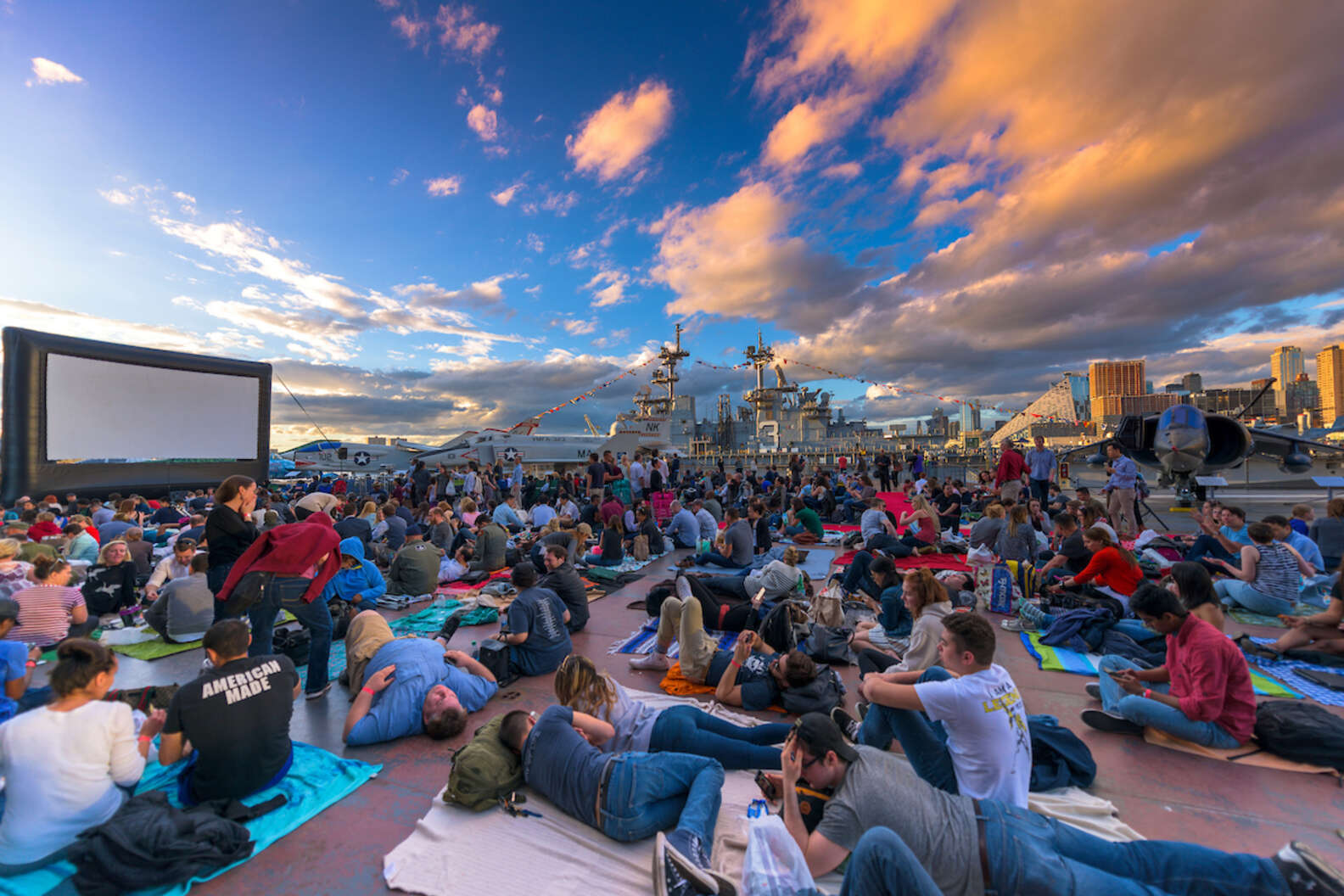
Langley and Lexington would be lost in the early days of the coming war, while Saratoga would survive, only to be scuttled at the nuclear tests on Bikini Atoll in 1947. This museum is open different days and hours depending on which month you visit them, and they have a gift shop in case you'd like to take home a souvenir after your visit.
Carriers In World War Ii
Located just north of Schenectady, it is home to dozens of aircraft, including the Republic F-105F Thunderchief, North American T-2C Buckeye, Chanute Glider, and the Bell UH-1H Iroquois, among others. You can stay current with the museum by visiting their website at www.esam.org.
Currently (July 2013) there are five US Navy Aircraft Carrier museums. Four are of Essex class carriers commissioned during World War II which underwent the SBC-125 refit in the 1950s to modernize them. All were commissioned in 1943 & served into modern times.
The last, the USS Lexington, was decommissioned in 1991 after 48 years of service. The other is the USS Midway, namesake of a larger class carrier built at the end of the war. She underwent two major refits, in the 1950s & in 1970 greatly enlarging her flight deck for modern aircraft.
She was commissioned in 1945 & decommissioned in 1992 after 47 years of service. If you have an interest in aviation and live in New York State, you're in luck because the state is home to 16 aviation museums.
Empire State Aerosciences Museum Glenville
There's a lot to celebrate when you live here because there are dozens of aviators from all branches of the military who were born or raised in the state. Hornet's upgrade was interrupted in April 1952, by an incident that took place thousands of miles away, when USS Wasp collided with the destroyer USS Hobson off Gibraltar, killing 176 of Hobson's sailors.
Wasp limped back to New York with a 75-foot section of its bow sheared off. Rather than fabricate a new bow section, the workers at the Brooklyn Navy Yard took Hornet's bow, which was slated to be replaced in the refit, and transported it by barge to the annex yard in Bayonne, NJ to be attached.
The whole operation took just 11 days, and Wasp was back in action. Looking over this list of visiting carriers, one thing that stands out is that none of them are nuclear-powered. Enterprise entered service in 1961, and the US has built 12 nuclear carriers, with four more planned.
Since 2009, when Kitty Hawk was decommissioned, the American carrier force has been made up entirely of nuclear-powered vessels, yet none have ever steamed into New York Harbor (though USS George Washington did operate air patrols off the city's Atlantic coast following the September

Why No Fleet Carriers Today?
11, 2001 terrorist attacks). Why not? The largest projects done by the Brooklyn Navy Yard in the post-war period were the construction of three supercarriers, Saratoga, Independence, and Constellation, each taking approximately four years to construct.
These 65,000-ton behemoths would dominate the Brooklyn skyline, and their construction and trial was quite a sight. Steam catapults were tested in the East River, requiring the halting of traffic over the Manhattan and Williamsburg Bridges.
When the ships finally departed the shipyard, they were outfitted with special folding masts, as they could barely squeeze under the East River bridges. And many New Yorkers on both sides of the river got a full view of the worst accident in the Yard's history, when the Constellation caught fire on December 19, 1960, killing 50 workers.
This museum is open daily from April to October and every day except Monday from November to March. They have an on-site gift shop to make shopping for souvenirs easy, and their aircraft exhibits include the North American F-1C Fury, Bell AH-1J Sea Cobra, Douglas XBT2D-1 Dauntless II, and the General Dynamics F-16A Fighting
Intrepid Sea Air And Space Museum New York
Falcon, among others. You can get additional details online at www.intrepidmuseum.org. Open on Thursday through Sunday throughout most of the year, the museum is home to dozens of aircraft, including the Lockheed T-33A, Douglas Dakota IV, Aero L-39C Albatros, General Dynamics F-111A, and the Stinson 108-2 Voyager
, to name a few. If you'd like to stay current on everything the facility offers, you can call them at 631-293-6398 or visit their website at www.americanairpowermuseum.com. Celebrating all aircraft made by Grumman, the facility houses the Grumman A-6E Intruder and the Grumman F-14A Tomcat.
It is located north of the old Grumman/Calverton airfield and is open daily most days of the year. You can visit them online at www.grummanpark.org or call them at 631-369-1826 if you need additional details on the facility itself or anything they are currently exhibiting.
If you have a long time to devote to dozens of aircraft, this is the place to be. Just a few of the aircraft on exhibit there include the Grumman YF-14A Tomcat, Breese Penguin, Curtiss JN-4A Jenny, a replica of the Sperry-Verville M-1 Messenger, and the Peel Z-1 glider boat, among many others.
American Airpower Museum Farmingdale
. This museum is open Tuesday through Sunday and some Mondays throughout the year, and they even have a gift shop filled with great souvenirs to enjoy, making it the perfect place to visit for all aviation buffs.
So today, the City Council anti-nuclear measure remains on the books, and perhaps out of deference to the public sentiment, or perhaps due to the intense operational demands on these ships, a nuclear-powered carrier has still never made a port call in

New York City. It's not because we don't have the births or facilities for them; these ships are roughly the same size as their conventional counterparts (as they have to fit in the same dry docks).
The answer is largely political. The Growler, a submarine moored on the pier and in active duty from 1958 to 1964, is also part of the museum. On her board, intact, is all the equipment. Those who wish can get inside the boat, but first you will be measured with a centimeter, because the hatches here are quite narrow.
Cradle Of Aviation Museum Garden City
Many nuclear-powered and nuclear-armed ships have visited New York City. The first such vessel in the world, the submarine USS Nautilus, visited New York several times, including after its record-breaking passage under the North Pole sea ice in 1958. The world's first nuclear merchant ship NS Savannah, made multiple visits starting in 1964
But when the Navy began planning for the Surface Action Group base in Staten Island in 1983, there was a great deal of public outcry against the base, largely based on the fact that the vessels may carry nuclear weapons.
None of the vessels intended to be based at Staten Island were nuclear powered, but they could be carrying nuclear weapons, and it was and is the policy of the United States military to never confirm nor deny if a ship is nuclear armed.
New York City is home to the Intrepid, permanently docked on the Hudson River and home to the Intrepid Sea, Air, and Space Museum, and the city still hosts Fleet Week every year around Memorial Day (with some exceptions), but aircraft carriers have
National Warplane Museum Geneseo
not been part of the festivals for over a decade. Let's take a look back at some of the floating airfields that have visited the city. The museum is open every day from April to September and on Mondays, Wednesdays, and Saturdays from October to March.
There is a small admission fee to enter, and the aircraft exhibits include the Fairchild C-119G Flying Boxcar, Aeronca L-16 Champion, Beech UC-43 Staggerwing, and the Lockheed C-130A Hercules, among others. It is located just south of Rochester and they can be contacted at www.nationalwarplanemuseum.com.
Open daily nearly every day of the year, MOMA is one of the most well-known and popular museums in Manhattan. There is a fee to enter, but it is worth every penny because it has something of interest to everyone.
It is home to the Bell 47D-1, and it can accommodate you no matter what your interests are. You can stay current on their exhibits by visiting them at www.moma.org or by calling them at 212-708-9400.

Museum Of Modern Art New York
This facility is home to dozens of aircraft, including the Piper J-3C Cub, Hughes OH-6A Cayuse, McDonnell FH-1 Phantom, and the Douglas B-26B Invader, to name a few. It is open Tuesday through Saturday nearly every day of the year, and there is also a great gift shop so you can commemorate your visit with the perfect souvenir.
In addition to standard aircraft, you can also find flight simulators, engines, missiles, and both permanent and temporary exhibits. Here, they truly offer something for everyone, so you will never leave disappointed. This museum is open daily throughout most of the year, but the hours of operation change according to the season.
There is an admission fee to enter and an on-site gift shop filled with souvenirs. It is located northwest of Elmira and is home to aircraft that include the Curtiss JN-4D Jenny, Travel Air D-4D Speedwing, Putzer/Raab Doppelraab, a replica of the Aerial Experiment Association Glider, Mercury Chic T-2, and the Mercury
S-1 White Racer, among others. You can visit them online at www.glennhcurtissmuseum.org for additional information about the facility. Museum of the aircraft carrier Intrepid in New York City. This museum is located aboard the well-deserved two hundred and thirty-seven meter American ship, which in its thirty-one years of service in the U.S.A.
Wings Of Eagles Discovery Center Horseheads
Navy, survived both World War II and kamikaze attacks and torpedo attacks. The aircraft carrier was launched in August 1943, it served until 1974, then it was written off and wanted to be dismantled, but the millionaire and philanthropist Zachary Fisher, helped to bring this warship to a berth near pier number 86 in New York City
: the Air and Space and Naval Museum was opened on board in 1982. Last week, New York City was visited by the flagship of the Royal Navy, HMS Queen Elizabeth. This 65,000-ton carrier has spent several weeks in the US while undergoing flight testing with the F-35B fighter, which will be the primary component of its air wing.
The seven-day stopover in New York was mostly for crew R-and-R, though the ship also hosted the Atlantic Future Forum on cybersecurity. Currently, none of the more modern "super carriers," meaning none of the Forrestal Class, Kitty Hawk Class, or later aircraft carriers, have been saved and set aside as museums.
However, there is an active effort underway to get the John F. Kennedy, CV-67, set up as an aicraft carrier museum in the New England area, it was a "super carrier," built to a modified Kitty Hawk standard, and
Glenn H Curtiss Museum Hammondsport
was the last conventionally powered (meaning non-nulcear) aircraft carrier the United States built. Some of the many aircraft housed in this facility include the Monocoupe 90, New Standard D-25, Spartan C-3, Curtiss Wright Fledgling, Cessna A185E, and the Wright EX Vin Fiz, among others.
They are open daily, but only have air shows on the weekends, and they are located north of Poughkeepsie. If you'd like to stay current on what's happening there, you can visit their website at www.oldrhinebeck.org or call them at 845-752-3200.

The air shows start at 2:00 p.m. every Saturday and Sunday, weather permitting. After 165 years of "service to the fleet," the final job done by the Brooklyn Navy Yard was the SCB-144 refit of USS Intrepid;
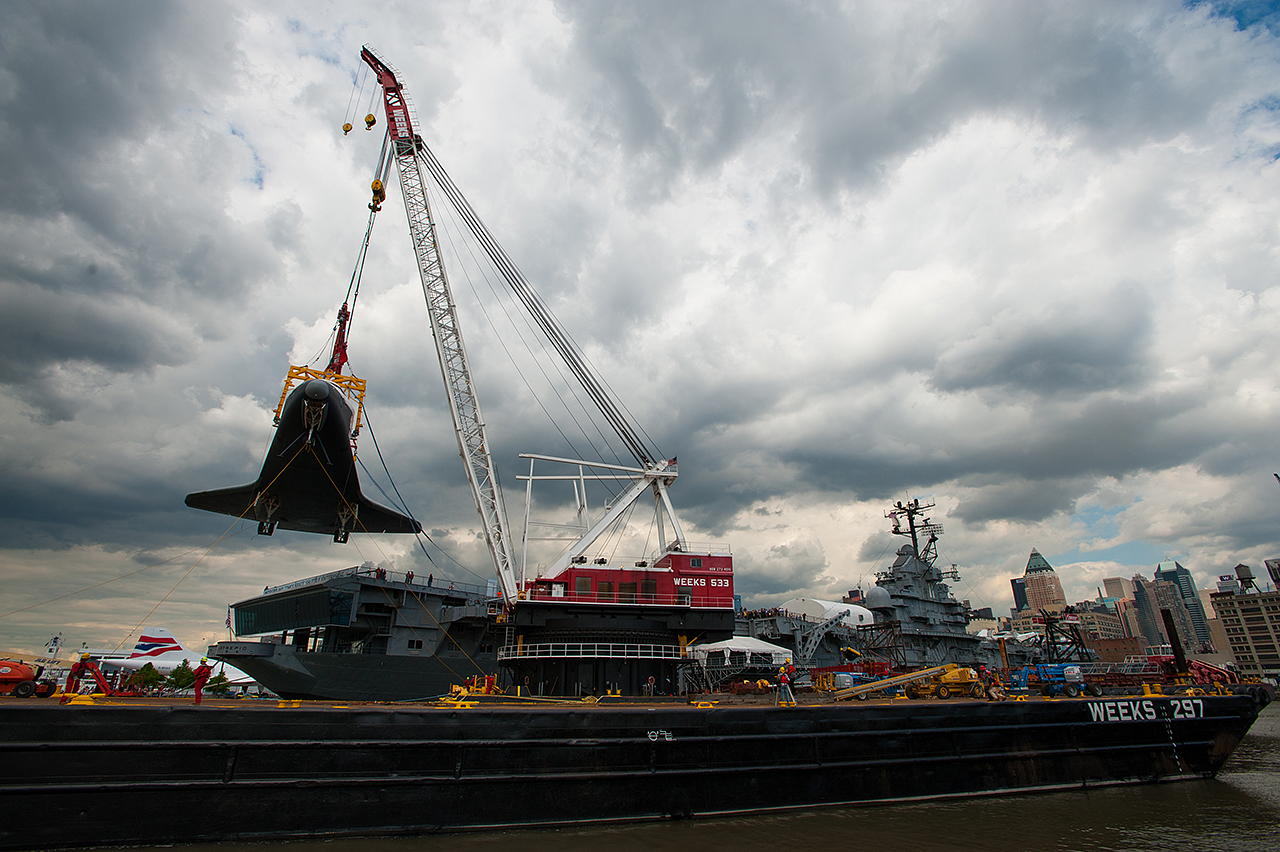
the job wasn't quite completed in time for the Yard's closure, and the ship had to be floated over to Bayonne to be completed. Incidentally, Intrepid sailed to Bayonne again in 2006, when the museum ship underwent 22 months of refurbishment.
Old Rhinebeck Aerodrome Red Hook
The record for carriers in New York was likely set on October 27, 1945, when the Navy Day review included the partially-completed Oriskany, Kearsarge, and Reprisal, along with the damaged Franklin and newly-commissioned Franklin D. Roosevelt were all at the
Yard, while Enterprise and Midway were held on the Hudson River. The first aircraft carriers came into service in the just at the end of World War I, and began to mature through the 1920's. While battleships were once the ultimate symbol of naval superiority, early experiments showed that a carrier's airplanes could neutralize and destroy naval artillery.
World War II would prove this beyond any doubt, and since the war, carriers have taken up that mantle. A floating airfield that can project power over a million square miles of ocean is a powerful weapon and symbol of not only military might, but technical expertise, as they are extremely difficult machines to build and operate.
But New York City has not only hosted carriers, but built them. The first constructed in New York Harbor was the USS Bennington, completed at the Brooklyn Navy Yard in 1944. Bennington was the first of five carriers completed or begun during World War II, along with Bon Homme Richard, Franklin D. Roosevelt, Kearsarge, and
What Is An Aircraft Carrier?
Oriskany. A sixth carrier, Reprisal, was laid down and more than half complete when the war ended in August 1945, eventually being sold for scrap. A coalition of Staten Island residents and environmental, peace, and disarmament activists organized after the base plans were announced.
A year earlier, one million people had marched on New York for nuclear disarmament, and Staten Island became a focal point of organizations like Riverside Church and SANE (National Committee for Sane Nuclear Policy). In 1984, the New York City Council passed a measure declaring the city a "nuclear-free zone," banning the weapons.
The following year, a ballot initiative could have blocked the transfer of the land for the Navy base to the federal government, but just days before the election, a judge ruled that the measure was unconstitutional, and it was stricken from the ballot.
Open Tuesday through Sunday, the museum is free to enter, but they accept and appreciate donations of any size. There is a gift shop for taking home great souvenirs after your visit, and it is home to aircraft such as the Fleet 8 and the Rensselaer Polytechnic RP-3.
Buffalo And Erie County Naval And Military Park Buffalo
If you'd like to learn more about their current exhibitions, simply visit them online at www.nysm.nysed.gov or give them a call at 518-474-5877. Of course, aviation museums don't just concentrate on local aviation experts. They also honor all branches of the military and are filled with enough artifacts to keep you there for days and still not get bored.
Closed from December to March, this facility is open daily from April to October and on Saturday, Sunday, and Black Friday in November. There is a nominal admission fee to get in, as well as a great gift shop for those who wish to commemorate their visit with a special souvenir.
Some of their most significant displays include the USS The Sullivans and the USS Little Rock, as well as aircraft such as the Bell UH-1H Iroquois, McDonnell TF-101B Voodoo, North American Aviation AGM-28 Hound Dog, and the Gyrodyne XHOG-
1, among others. The museum is open from Wednesday to Saturday and houses aircraft such as the Douglas NA-4E Skyhawk. It is located just north of Utica and commemorates the Battle of Oriskany, the aircraft carrier CV/CVA-34 USS Oriskany, and even the small town of Oriskany.
Oriskany Village Museum Oriskany
If you're a local or history buff, you owe it to yourself to visit the museum, because it will certainly not disappoint. While some ships refit later in the program had new steam catapults installed, Bennington was fitted with an older hydraulic launch system.
This would have tragic consequences in May 1954, when a leak in the system caused a fire that killed 104 sailors. The ship was brought back to Brooklyn for repairs and to undergo the next-phase SCB-125 upgrade, later joined by Intrepid.
Carriers continued to travel up the East River after World War II. America's fleet carriers had helped win the war in the Pacific, but the dawn of the jet age meant these platforms needed serious upgrades to remain useful.
Between 1947 and 1957, nearly all the Essex-class carriers underwent modifications under the SCB-27 and SCB-125 programmes, reconfiguring flight decks and launch systems to handle faster, heavier aircraft. The still-incomplete Oriskany was the testbed for the SCB-27 program, followed by Bennington, Hornet, and Ticonderoga at the Brooklyn Navy Yard.
Modernizing The Fleet
aircraft carrier intrepid museum, uss intrepid museum new york city, intrepid museum aircraft, nyc intrepid museum, where is the intrepid museum, intrepid museum new york, uss intrepid museum, intrepid museum manhattan